
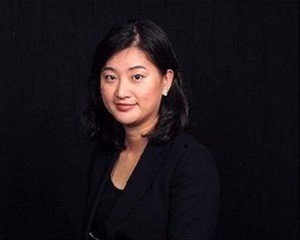

Biography
Yunjung is a professor in the School of Communication Science and Disorders and directs the FSU Motor Speech Laboratory. She typically teaches the graduate course (SPA 5230 Motor Speech Disorders) during the fall semester. Her primary research interests center on understanding how a talker’s articulatory behavior shapes listeners’ perceptions. Specifically, her work has focused on identifying the acoustic and articulatory characteristics of speech produced by individuals with Parkinson’s disease and stroke that negatively affect speech intelligibility. To this end, she employs a diverse methodological toolkit, including acoustic analysis software, electromagnetic articulography (EMA), and ultrasound imaging.
Recent work in the lab has emphasized developing speech rehabilitation approaches for individuals with diverse language backgrounds (e.g., foreign-born immigrants, dialect users) while recognizing the essential role of caregivers as service navigators and communication partners. This work is conducted through international, multidisciplinary collaborations with experts in rehabilitation psychology, business, computer engineering, medicine, and clinical care. Yunjung currently serves as a member of the ASHA Research and Scientific Affairs Committee (2025-2027).
Education
- PhD, Communicative Disorders, University of Wisconsin-Madison
- MS, Korean Linguistics, Korea University
- BS, Korean Education, Korea University
Research Interests
Speech Science, Motor Speech Disorders, Foreign Accents
Publications & Research
Thompson, A., Hirsch, M., & Kim, Y-J. (2026). The effects of electromagnetic articulography sensors on speech in individuals with and without Parkinson’s disease. Journal of Speech, Language, and Hearing Research 69(2), 483-505. https://doi.org/10.1044/2025_JSLHR-25-00263
Kim, Y-J., Berry, J., Lee, S., & Lin, L. (2025). A cross-language study of oral diadochokinesis: Rates and rhythm. Folia Phoniatrica et Logopaedica. https://doi.org/10.1159/000548778
*Thompson, A., & Kim, Y-J. (2024). Acoustic and kinematic predictors of intelligibility and articulatory precision in Parkinson’s disease. Journal of Speech, Language, and Hearing Research, 67(10), 3595-3611. https://doi.org/10.1044/2024_JSLHR-24-00153
Kim, Y-J. (2024). Introduction to the Forum: Native Language, Dialect, and Foreign Accent in Dysarthria. Journal of Speech, Language, and Hearing Research, 67(9), 2811–2812. https://doi.org/10.1044/2024_JSLHR-24-00522
Kim, Y-J., Thompson, A., & Lee, S. (2024). Does native language matter in perceptual ratings of dysarthria? Journal of Speech, Language, and Hearing Research, 67(9), 2842-2855. https://doi.org/10.1044/2024_JSLHR-23-00668
Kim, Y-J., Thompson, A., & Nip, I. (2024). Effects of deep-brain stimulation on speech: Perceptual and acoustic data. Journal of Speech, Language, and Hearing Research, 67(4), 1090-1106. https://doi.org/10.1044/2024_JSLHR-23-00511
Kim, Y-J., Kent, R. D., & Thompson, A. (2024). Instrumental analysis of articulation. In N. Müller, L. Spencer, & M. Ball (Eds), The Handbook of Clinical Linguistics (2nd Ed), Wiley. https://doi.org/10.1002/9781119875949.ch35
Moya-Galé, G., Kim, Y-J., Fabiano, L. (2024). Raising awareness about language- and culture-specific considerations in the management of dysarthria associated with Parkinson’s disease within the United States. Journal of Speech, Language and Hearing Research, 67(9), 2813-2821. https://doi.org/10.1044/2023_JSLHR-23-00365
Berry, J. & Kim, Y-J. (2023). Towards the dissociation of dysarthria and dialect in speech kinematics. Proceedings of Meetings on Acoustics, 30(1).
*Thompson, A., Hirsch, M. E., Lansford, K. L. & Kim, Y-J. (2023). Vowel acoustics as predictors of speech intelligibility in dysarthria. Journal of Speech, Language and Hearing Research, 66(8S), 3100-3114.
Nip, I., Burke, M. M., & Kim, Y-J. (2023). The effects of deep brain stimulation on speech motor control in people with Parkinson’s disease. Journal of Speech, Language and Hearing Research, 66(3), 804-819.
Kim, Y-J. & Thompson, A. (2022). An acoustic-phonetic approach to effects of face masks on speech intelligibility. Journal of Speech, Language and Hearing Research, 65(12), 4679-4689.
*Hirsch, M.E., Thompson, A., Kim, Y-J, Lansford, K.L. (2022). The reliability and validity of speech-language pathologists’ estimations of intelligibility in dysarthria. Brain Sciences. 12(8):1011.
Kim, Y-J., Chung, H., & Thompson, A. (2022). Acoustic and articulatory characteristics of English semivowels /ɹ, l, w/ produced by adult second language speakers. Journal of Speech, Language and Hearing Research, 65(3), 890-905.
Kent, R.D., Kim, Y-J., & Chen, L-M. (2022). Oral and laryngeal diadochokinesis across the lifespan: A scoping review of methods, reference data, and clinical applications. Journal of Speech, Language and Hearing Research, 65(2). 574-623.
Chung, H. & Kim, Y-J. (2021). Relationship between acoustic characteristics of Korean-English speakers’ /l/ and foreign accent ratings. Journal of Communication Disorders, 94, 106157.
*Espinal, A., Thompson, A., & Kim, Y-J. (2020). Acoustic characteristics of American English liquids /ɹ/, /l/, /ɹl/ produced by Korean L2 adults. The Journal of the Acoustical society of America, 148, EL 179- 84.
*Watkins, E., Thompson, A., & Kim, Y-J. (2019). Speech deterioration of amyotrophic lateral sclerosis before and after diagnosis: A case study of a newscaster. Perspectives of the ASHA Special Interest Groups, 4, 1189-98.
*Thompson, A., & Kim, Y-J. (2019). Relation of second formant trajectories to tongue kinematics. The Journal of the Acoustical Society of America, 145 (4), EL323-8.
Kim, Y-J., Coalson, G. A., & Berry, J. J. (2018). A kinematic analysis of coarticulation effects on schwa. Folia Phoniatrica et Logopaedica, 70 (3-4), 203-12.
Kim, Y-J. (2017). Acoustic characteristics of fricatives /s/ and /ʃ/ produced by speakers with Parkinson’s disease. Clinical Archives of Communication Disorders, 1.
Kim, Y-J. & Choi, Y. (2017). A cross-language study of acoustic predictors of speech intelligibility in individuals with Parkinson’s disease. Journal of Speech, Language, and Hearing Research, 60(9), 2506-18.
* indicates student’s projects
Grants & Awards
Kim, Y-J. (PI). Clinical application of ultrasound imaging to talkers with Parkinson’s disease, FSU Council on Research and Creativity, $100,000, 2025-2027.
Kim, Y-J. (PI). Bridging bench science to clinical practice: Exploring ultrasound imaging for articulation studies in Parkinson’s disease. FSU Institute for Successful Longevity, $25,000, 2025-2026.
Kim, Y-J. (PI). Toward a speech rehabilitation model for linguistically and culturally minor groups: Foreign born immigrants. NIH-NIDCD R01020468, 2023-2027, $932,094.
Kim, Y-J. (mPI). Development of speech rehabilitation software for persons with dysarthria secondary to stroke. Korea Health Industry Development Institute (KHIDI), HI22C0736. 2022-2026. $1,226,691.
Kim, Y-J. (sponsor). A multidimensional study on articulation deficits in Parkinson’s disease (PI: Thompson). NIH-NIDCD. F31DC020121, 2021-2023. $94,720.
Kim, Y-J. (PI). Vowel impairments in people with Parkinson’s disease. Focusing on variability. The Committee on Faculty Research Support (COFRS), FSU Council on Research Creativity, 2021. $18,000.
Kim (PI), Articulatory modifications across speaking modes, Louisiana Board of Regent Support Fund, 2019-2020. $18,388.
Kim (mPI). Application of ultrasound imaging to speech-language pathology, LSU Student Technology Fee Support, 2018. $45,692.
Kim (PI). Speech kinematics in individuals with Parkinson’s disease. LSU Faculty Research Grant, 2016-2017. $10,000.
Kim (PI). The same dysarthria in different languages: Hypokinetic dysarthria in English and Korean. NIH-NIDCD R03 012405, 2012-2017. $426,999.
Kim (PI). Articulatory kinematics research using an electromagnetic system, LSU Humanities and Social Sciences Support for New Technology, 2015. $55,890.
Kim (co-I). Identifying the vocal markers of schizophrenia-spectrum disorders (PI: Cohen). NIH-NIMH, R03 092622, 2011-2014. $254,200.